Day trips from Tokyo — nature and culture inside a single day.
Tokyo repays travellers who leave it — briefly. Within day-trip range sit a national park that begins inside the city limits, a shrine town backed by highland lakes, and the Fuji-Hakone-Izu classic; and on a rainy day the culture option never leaves town at all, in the museum quarter at Ueno. This guide weaves four collections together — national parks, railway stations, museum objects and vintage prints — into days out you can plan from the same base.
The collections behind this guide currently hold 1,521 railway station pages, 86 national park guides and 10,000 museum object records — counts checked on 17 November 2026.
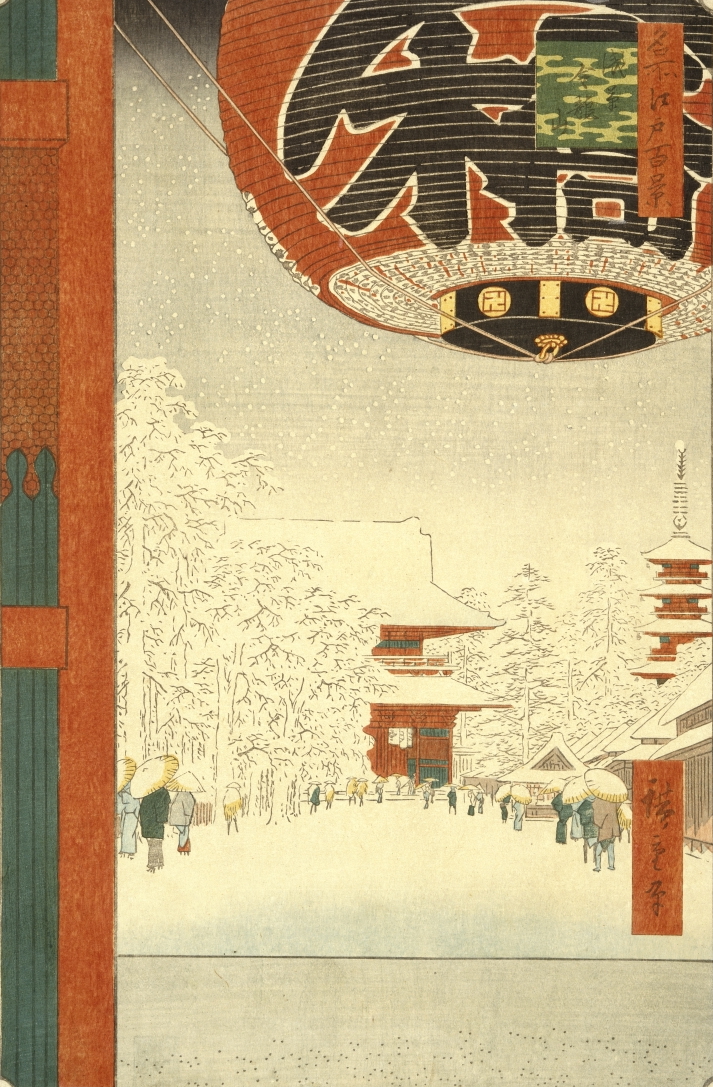
Print: Kinryuzan Temple, Asakusa, by Utagawa Hiroshige, 1856 · Public domain. Source
Three ways to spend the day
Chichibu-Tama-Kai: the park inside Tokyo
Tokyo Metropolis has its own national park: the forested mountains of Okutama at the city’s western edge, all river valleys and ridge walks. It is the nearest thing to wilderness that still counts as staying in Tokyo — and the park guide explains the country before you ride out to it.
Nikko: shrines first, then altitude
North of the capital, Nikko pairs one of Japan’s great shrine landscapes with a national park of highland lakes, marshes and waterfalls behind it. Culture in the morning, mountain air after lunch — the classic northbound day trip, covered end to end by the park guide.
Ueno: the culture day that skips the train
Some days the best trip is across town. The museum objects collection is anchored by the Tokyo National Museum in Ueno — including a tanto dagger signed Yukimitsu that carries a National Treasure designation — and Asakusa, printed by Hiroshige above, is a short hop away for the old-town half of the day.
Park pages describe landscapes, not today’s conditions: before any walk, check the park’s official visitor information for trail openings, weather and wildlife guidance. Museum records tell you what a museum holds; displays rotate, so confirm what is on view before a special trip. Station pages describe the station and its lines — always check the operator for live timetables and fares.