How to read the sakura records — first flowers, full bloom, and the tree that decides.
A cherry blossom record looks simple — a place, a condition, a date — and that simplicity is the point. Japan’s blossom season is observed, not announced: at each weather station a designated sample tree is watched, and the season’s two landmarks are the days that tree first flowers and reaches full bloom. The seasons collection holds 112 of these dated observations across 56 stations for 2026. This guide teaches the reading, using the real 2026 dates.
The seasons collection holds 112 dated observations across 56 stations for the 2026 season — checked on 17 November 2026.
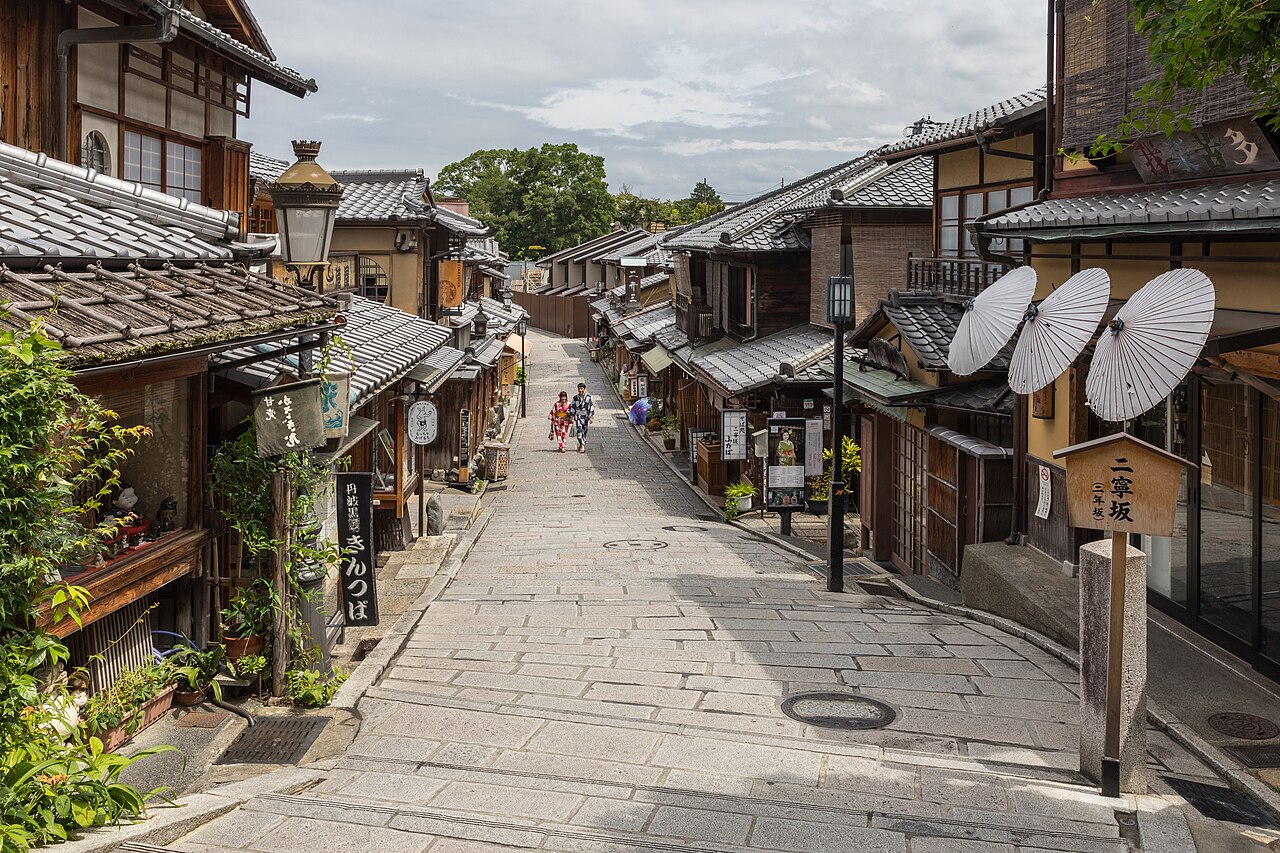
Photo: Osaka Castle 03bs3200.jpg · Wikimedia Commons · CC BY 2.5. SourcePhoto: Pedestrian road with pavements, paper umbrellas and people in yukata, Higashiyama-ku, Kyoto · CC BY-SA 4.0. Source
The three ideas that unlock every record
Kaika: the starting gun
Kaika — “first flowering” — is recorded when the station’s sample tree opens its first blossoms (a handful of flowers is enough). In 2026 Tokyo’s kaika fell on 19 March. A kaika record does not mean a city in bloom; it means the clock has started.
Mankai: the peak, and the gap that varies
Mankai — “full bloom” — is recorded when most of the sample tree’s blossoms are open. Tokyo followed kaika by nine days (28 March), Kyoto by seven (23 → 30 March), Osaka by eight (26 March → 3 April) and Sapporo by six (18 → 24 April). The gap is weather, written as an interval.
The front: one spring, a month wide
Read the kaika records northwards and the season becomes a journey: Tokyo 19 March, Kyoto 23 March, Osaka 26 March — and Sapporo, in Hokkaido, not until 18 April, a full month after Tokyo. That slow northward line is the famous blossom front, and the records let you ride it on paper before you ride it by train.
Records are observations of one sample tree per station — a rigorous yardstick, but still one tree. Streets a few hundred metres apart, and exposed or sheltered trees, can run days apart from the station tree. Use the records to choose your window and your city; use local reports in the week itself for the exact park and day.